
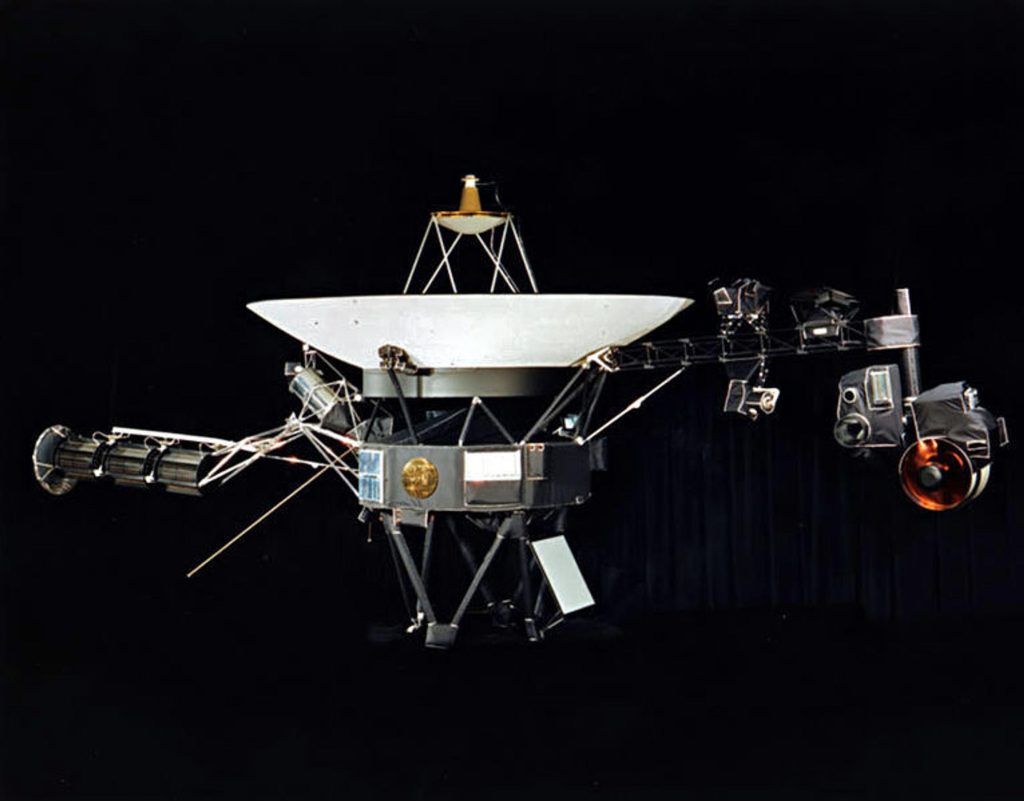
Voyager 1 is crossing ONE LIGHT-DAY from Earth today, and this is an extraordinary milestone in space exploration! But the most fascinating part is not simply that Voyager 1 is 26 billion kilometres away. It is what that distance means for communication, human engineering, and our understanding of the universe.
What exactly is one light-day?
First, we need to understand the concept of a light-day.
We normally measure distances using:
- Metres and kilometres on Earth.
- Millions of kilometres for distances within the Solar System.
- Light-years for distances between stars.
But light travels incredibly fast: approximately 300,000 kilometres per second (299,792 km/s).
A light-day is the distance light travels in 24 hours.
ONE LIGHT-DAY
25.9 billion km
Approximately 25,902,068,371 kilometres
Speed of light 299,792 km/s
Seconds in 24 hours 86,400
Distance Speed × Time
In other words, if you could travel at the speed of light, it would take you exactly 24 hours to cover one light-day.
Important: A light-day is a measurement of distance, not time.
What is Voyager 1?
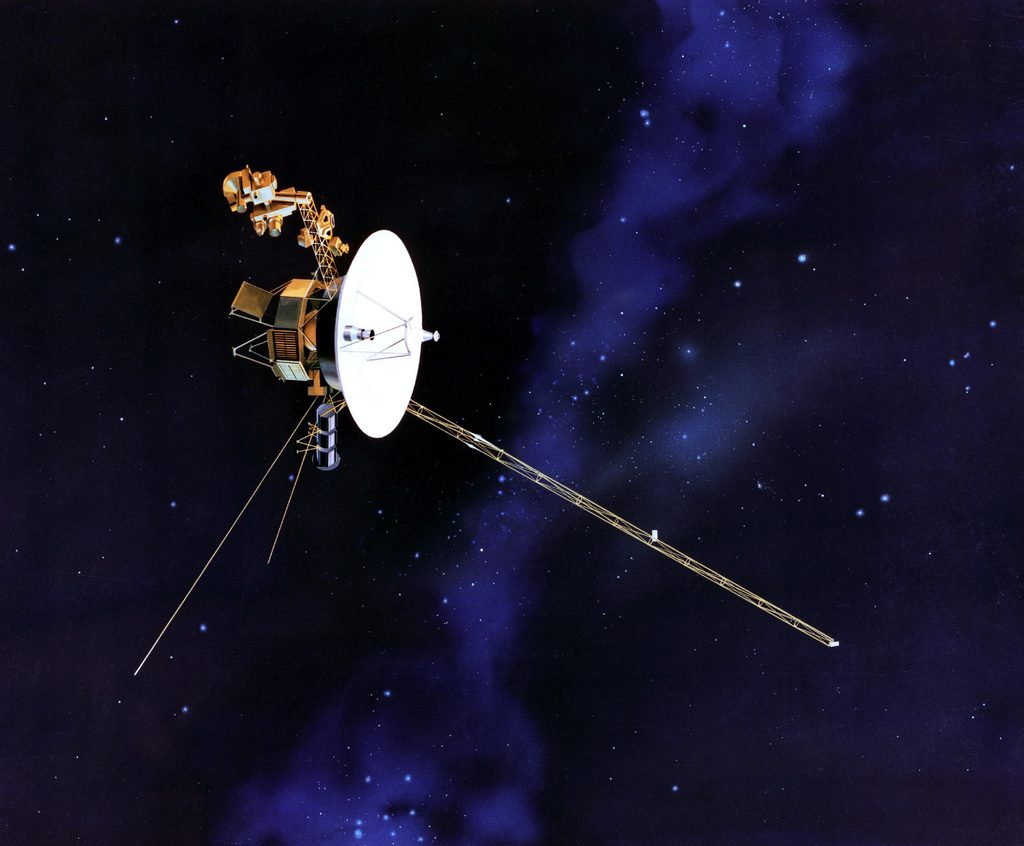
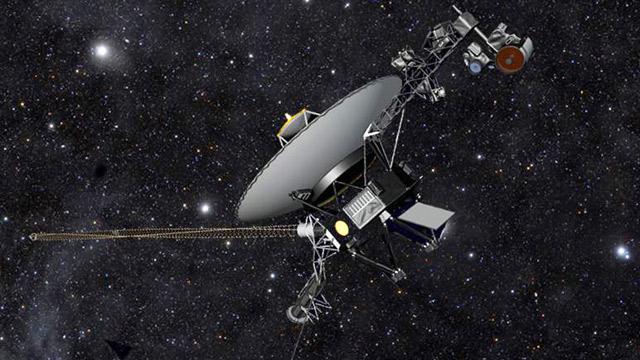
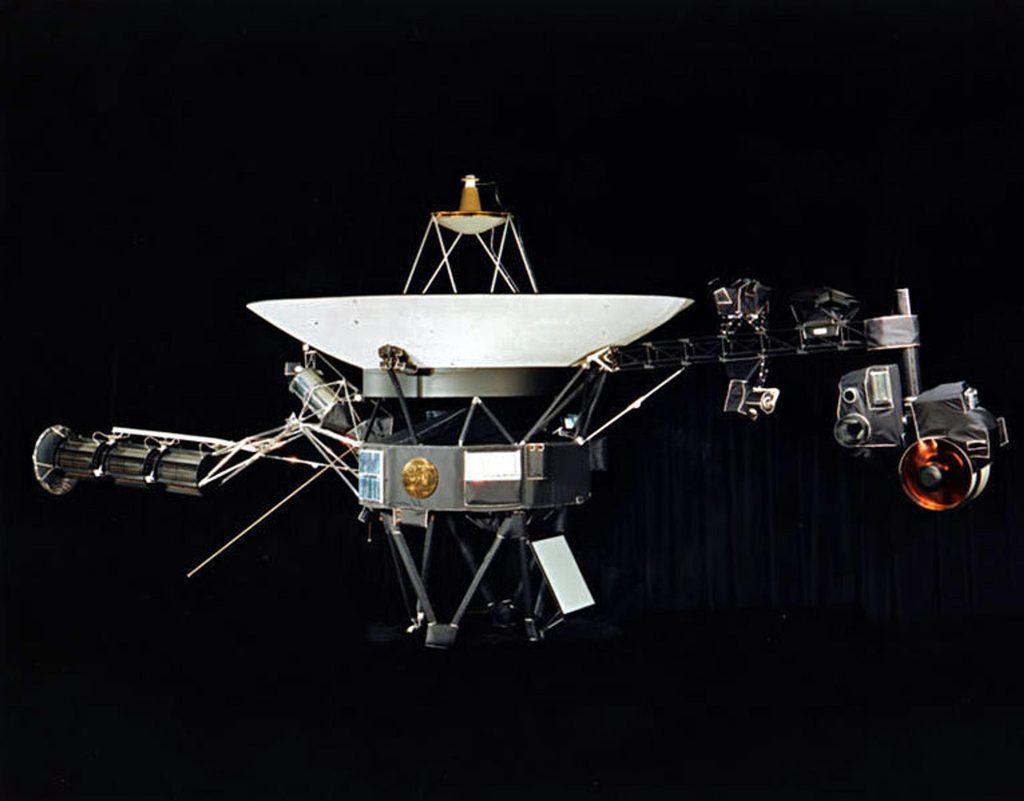
Voyager 1 is an unmanned spacecraft launched by NASA on September 5, 1977.
Its original mission was to explore the outer planets of our Solar System, particularly Jupiter and Saturn.
It accomplished some remarkable things:
- In 1979, it flew past Jupiter and sent back detailed images and scientific observations.
- In 1980, it flew past Saturn and studied its rings and moons.
- It discovered important details about Jupiter’s moons, including volcanic activity on Io.
- It continued travelling beyond the outer planets rather than stopping after its original mission.
Eventually, Voyager 1 became the first human-made spacecraft to enter interstellar space in August 2012.
That means it crossed the heliopause, the boundary where the Sun’s solar wind gives way to the interstellar environment.
How far is 26 billion kilometres?
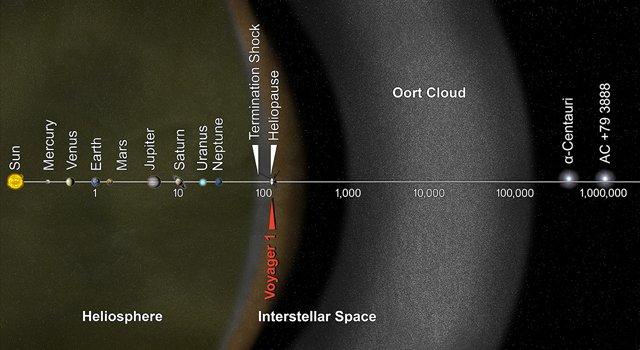
Let’s make this distance easier to imagine.
Consider these comparisons:
| Distance | Approximate distance |
|---|---|
| Earth to Moon | 384,400 km |
| Earth to Sun | 150 million km |
| Earth to Neptune | 4.5 billion km |
| One light-day | 25.9 billion km |
Voyager 1 is approximately:
- 67,000 times farther from Earth than the Moon.
- 173 times farther from Earth than the Sun.
- More than five times the average distance between Earth and Neptune.
Imagine travelling from Earth to the Moon. You would need to repeat that journey approximately 67,000 times to cover Voyager 1’s distance!
And remember, Voyager 1 is still moving away.
Why does communication take 48 hours?
This is perhaps the most interesting part.
You might wonder: NASA has powerful antennas, computers and advanced communication technology. Why can’t it communicate with Voyager instantly?
The answer is that nothing can transmit information faster than light in a vacuum, according to our current understanding of physics.
NASA communicates with Voyager using radio waves, which travel at approximately the speed of light.
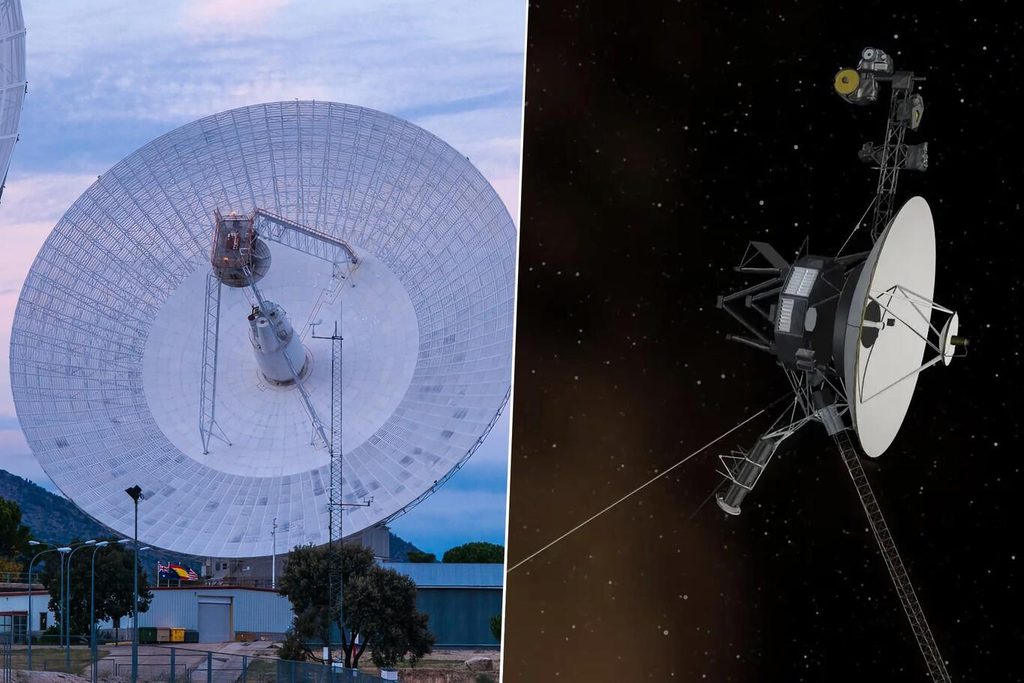
Let’s imagine NASA wants to send Voyager 1 a command.
The communication journey
- Hour 0 – Earth sends a commandNASA transmits a radio signal toward Voyager 1.
- Hour 24 – Voyager receives the commandThe signal has travelled approximately 25.9 billion kilometres.
- Voyager processes the commandThe spacecraft executes the instruction and, assuming an immediate response, transmits a reply.
- Hour 48 – Earth receives the replyThe return signal takes another 24 hours to reach Earth.
48 hours
Minimum idealised round-trip signal time, assuming an immediate reply.
Think about the implications.
If Voyager experiences an unexpected problem, NASA cannot simply send a command and receive an immediate response.
Engineers must account for the communication delay, and the spacecraft must be capable of handling many situations autonomously.
This is one reason spacecraft engineering is so challenging.
Where exactly is Voyager 1?
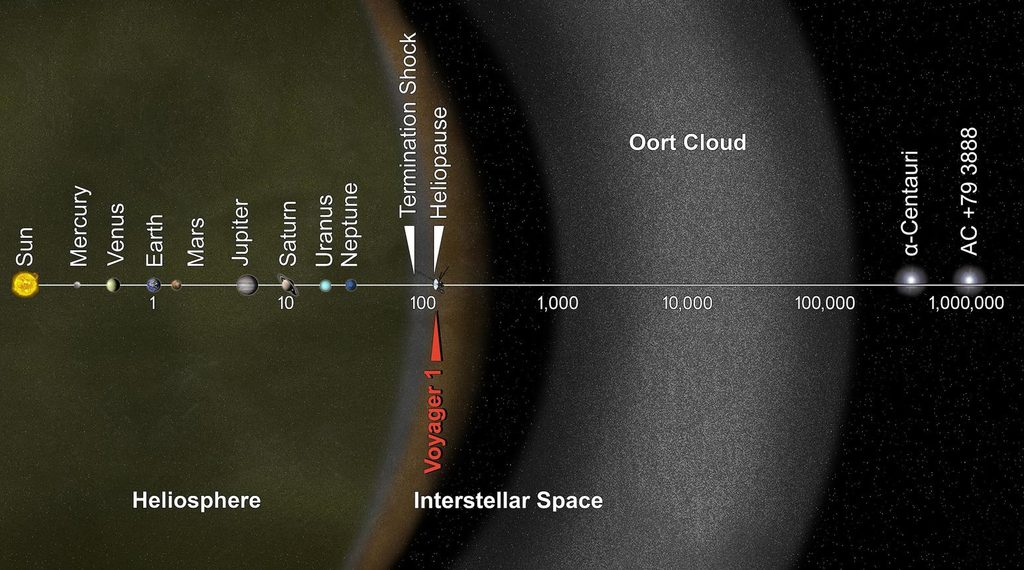
Here is another fascinating fact: Voyager 1 is no longer inside the Sun’s protective bubble, called the heliosphere.
The heliosphere is an enormous region filled with charged particles and influenced by the Sun’s magnetic field and solar wind.
In August 2012, Voyager 1 crossed the heliopause, the outer boundary of this region.
It entered what scientists call interstellar space.
But be careful: this does not mean it has completely left the Solar System.
Why?
Because the Sun’s gravitational influence extends much farther than the heliosphere. The distant Oort Cloud, a hypothesized reservoir of icy objects, is still considered part of the Solar System.
So Voyager 1 has entered interstellar space, but it has not yet travelled beyond the entire gravitational domain of the Sun.
Is Voyager 1 still working after almost 50 years?
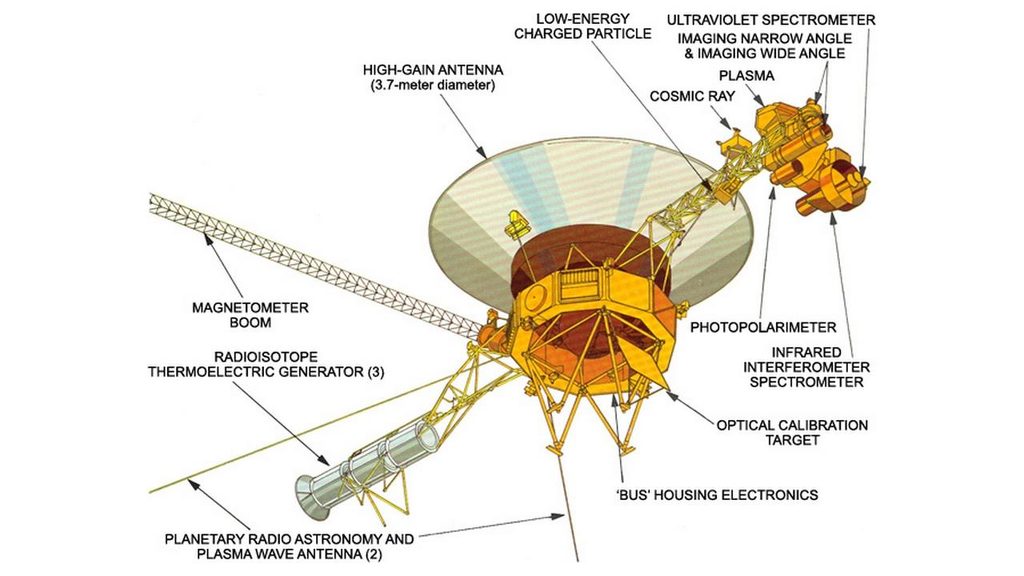
Yes! And this is one of the greatest engineering achievements in its history.
Voyager 1 does not use ordinary solar panels because sunlight is extremely weak at its distance.
Instead, it uses a Radioisotope Thermoelectric Generator (RTG).
An RTG converts heat produced by the natural radioactive decay of plutonium-238 into electrical energy.
The technology has allowed Voyager 1 to operate for almost five decades without refuelling.
However, its electrical power decreases gradually, so NASA has been switching off instruments and managing its remaining energy carefully.
The spacecraft has experienced technical problems, including communication interruptions, but engineers have repeatedly found ways to keep it operating.
NASA has estimated that power-saving measures could allow some scientific operations to continue into the coming years.
What message is Voyager 1 carrying from humanity?
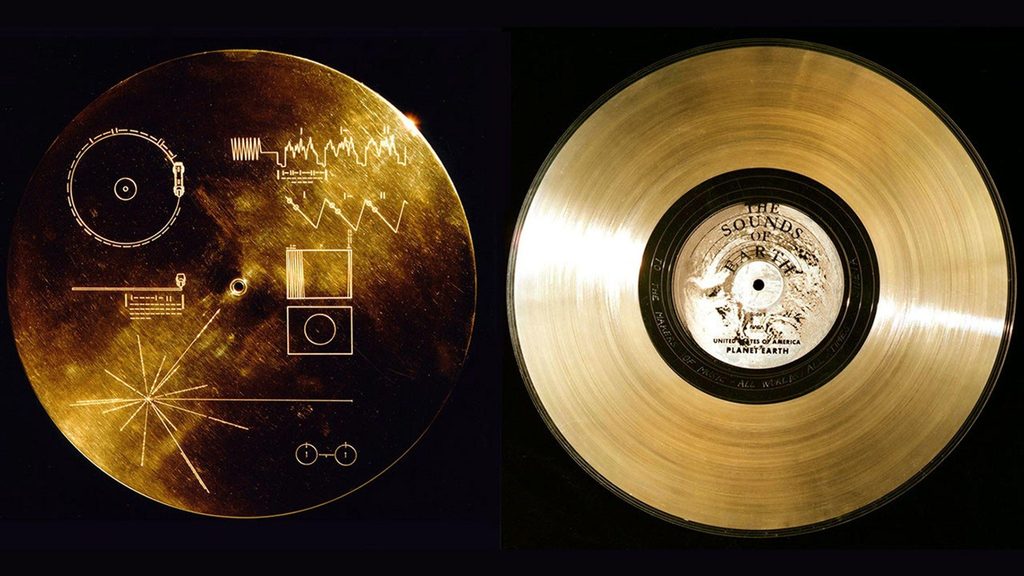

This is one of my favourite parts of the Voyager mission.
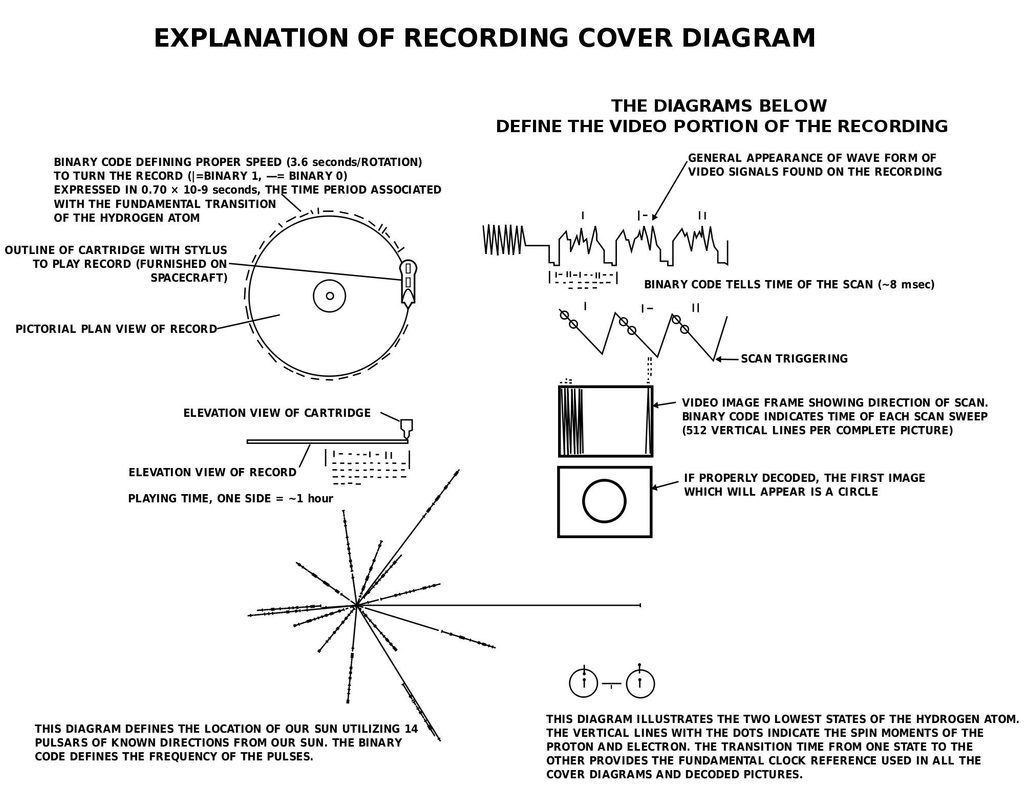
Voyager 1 carries something called the Golden Record.
It is a gold-plated copper record containing:
- Greetings in 55 human languages.
- Sounds of Earth, including birds, wind, rain and human voices.
- Music from different cultures.
- Images representing human beings, our planet and our civilization.
- Scientific information intended to help an intelligent civilization understand where the record came from.
Imagine that millions or billions of years from now, another intelligent civilization discovers this spacecraft.
They might discover a message from a species that once lived on a small planet orbiting an ordinary star.
It is essentially a time capsule from humanity.
Has Voyager 1 actually crossed the milestone today?
Milestone reached – November 18, 2026
Yes! According to NASA, Voyager 1 reached the one-light-day distance at:
- Date: November 18, 2026.
- Time: 2:16:07 a.m. Pacific Standard Time.
- Ethiopian time: 1:16 p.m. (13:16).
- Distance: Approximately 25.902 billion kilometres from Earth.
Since it is now November 18, 5:07 p.m. in Ethiopia, the milestone has already been reached.
NASA’s calculations identified the crossing time, and confirmation through the spacecraft’s signal necessarily involves the enormous communication delay.
You can follow the spacecraft through NASA’s official tracker:
NASA – Where Are Voyager 1 and Voyager 2 Now?
What happens after one light-day?
Nothing physically dramatic happens to the spacecraft when it crosses this distance.
There is no barrier, explosion, special gravitational field or sudden change in its environment.
The milestone is significant because it demonstrates how far human technology has travelled.
Consider these milestones:
- 1977 – LaunchVoyager 1 begins its journey from Earth.
- 1979 – JupiterIt explores Jupiter and its moons.
- 1980 – SaturnIt explores Saturn and its rings.
- 2012 – Interstellar spaceIt becomes the first human-made spacecraft to cross the heliopause.
- 2026 – One light-dayIt becomes the first human-made object to reach this distance from Earth.
One final mind-blowing comparison
Let’s compare Voyager 1’s speed with the speed of light.
Voyager 1
61,000 km/h
Approximate spacecraft speed
Speed of light
1.08 billion km/h
Approximately 17,500 times faster than Voyager 1
Despite travelling at approximately 61,000 kilometres per hour, Voyager 1 has taken almost 50 years to reach a distance that light covers in just 24 hours.
And there is something even more astonishing: the nearest star system to our Sun, Alpha Centauri, is approximately 4.37 light-years away.
At Voyager 1’s present speed, a journey of that distance would take roughly 75,000 years, assuming a straight journey at a constant speed.
This achievement gives us a different perspective on humanity. We built a machine on Earth, launched it in 1977, and almost 50 years later, that machine is still travelling through interstellar space, carrying a message about our civilization.
Think about that:
The people who designed Voyager 1 in the 1970s are not necessarily alive today, but their creation is still exploring the universe.
That is an extraordinary legacy of science, engineering and human curiosity. 🌍🚀
And perhaps the most beautiful thought is this: somewhere in the darkness between the stars, a little machine built by human hands is still carrying a piece of Earth.

